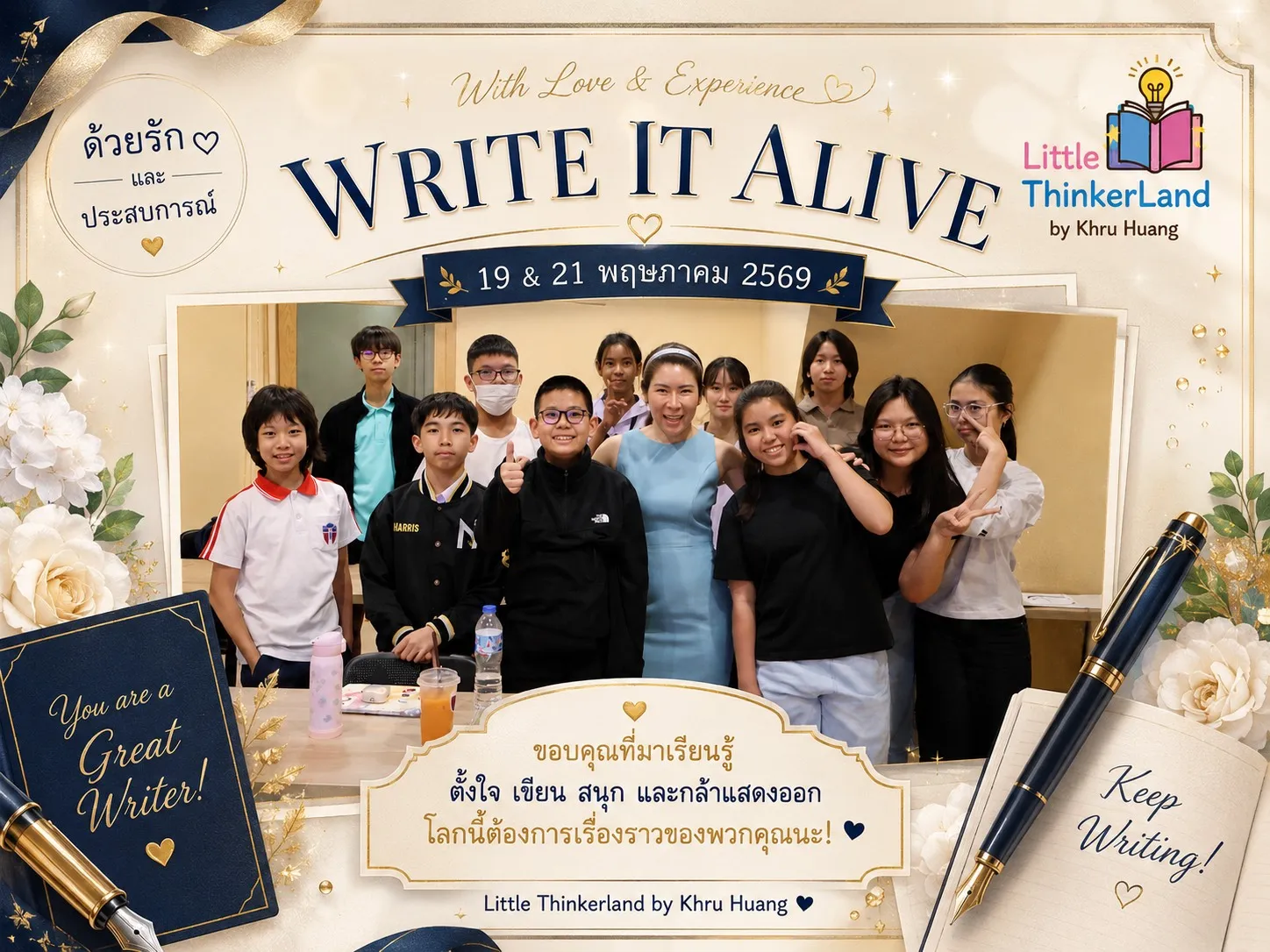
The energy of these teenagers—full of dreams, strong language foundations, and a genuine desire to learn—combined perfectly with the freedom of a Writing Sandbox, where they were encouraged to think, explore, and write without fear of making mistakes. It was no surprise that the session moved quickly and was filled with enthusiasm, creativity, and meaningful discussions.
One of the most valuable moments today was refining the students’ introduction paragraphs. A strong opening can make a powerful first impression, and for prestigious programs such as the ASEAN Scholarship, that first impression often determines whether an essay stands out from the very first line.
Let’s briefly explore why the revised version works so effectively:
• From Passive to Active Agency
The original sentence, “I study at…”, merely states a fact. The revised version, “My academic foundation at…”, transforms the school from a place of study into a meaningful force that shapes the student’s growth and development.
• Building Credibility Through Tone and Vocabulary
Words such as famous or fun may sound friendly and age-appropriate, but scholarship essays require a higher level of academic maturity. A sentence like:
“My academic foundation at ______ has provided a dynamic laboratory to cultivate critical thinking and creative inquiry.”
immediately communicates intellectual depth, self-awareness, and academic potential.
To help students visualize this process more clearly, here are three simple techniques for upgrading an essay introduction:
1. Replace Generic Adjectives with Academic Language
Instead of relying on words like good, bad, famous, or very, choose vocabulary that demonstrates analytical thinking and sophistication, such as distinguished, reputable, innovative, or transformative.
2. Avoid Formulaic Openings
Scholarship reviewers read hundreds, sometimes thousands, of essays. Sentences such as “Nowadays, technology is very important…” or “In my opinion…” rarely capture attention. Encourage students to begin with a unique perspective, reflection, or insight.
3. Follow the Principle: “Show, Don’t Just Tell”
Rather than writing, “I am an active student,” demonstrate that quality through specific actions, experiences, and growth. Strong writing allows readers to see evidence instead of simply receiving claims.
Today’s Key Takeaway
Writing a scholarship essay is not merely about using correct grammar. It is about transforming abstract thoughts into clear, meaningful, and persuasive language. It is a process of turning potential into presence—allowing a student’s voice, values, and aspirations to come alive on the page.
The students in today’s workshop were fortunate to have a safe and supportive Sandbox environment where they could experiment, revise, and strengthen their ideas. With their solid foundations, determination, and growing ability to express themselves with clarity and confidence, their scholarship journeys are certainly worth watching.
With appreciation and experience,
Teacher Huang
Little Thinker Land
Interested in our Young Scholarship Program — a specialized writing course designed for students aged 9–13 preparing for scholarship applications?
📩 Contact us via Line ID: Lenuwat or @Littlethinkerland